


Why High Density Matters in Space Systems?
Space platforms operate under some of the most restrictive design constraints of any engineering environment. Every millimeter, gram, and connection counts.
Increasing RF density directly enables:
- More capability per satellite (higher throughput, multi-function payloads)
- Reduced size and weight (SWaP), lowering launch costs
- Greater system scalability, especially for large constellations
- More compact and integrated payload architectures
As satellite missions evolve, these advantages compound.
In LEO: Density Drives Scale
LEO constellations depend on small, highly capable satellites produced at scale. High-density RF architectures allow designers to:
- Maximize functionality within small satellite footprints
- Reduce payload size and simplify mechanical layouts
- Improve manufacturability for high-volume production
Without dense interconnect solutions, scaling constellation performance becomes inefficient and cost-prohibitive.
In GEO: Density Drives Capability
In GEO systems, density is less about size constraints alone and more about maximizing payload performance. High-density RF enables:
- Advanced digital payloads and beamforming systems
- Increased channel count and bandwidth
- More flexible, software-defined architectures
In both orbits, density is the foundation for next-generation performance.
The Industry Shift Toward High-Density RF Architectures
Several converging trends are accelerating the need for dense RF interconnects:
- Proliferated LEO constellations with higher satellite counts
- GEO satellites transitioning to high-throughput, digital payloads
- Widespread adoption of phased arrays and beamforming
- Continued pressure on SWaP across all mission types
These trends all point to one requirement: dramatically increasing interconnect density without compromising reliability.
Legacy solutions like SMA and even traditional SMP struggle to scale efficiently in these environments, creating a clear gap between system requirements and interconnect capability.
CoreHC 2.5 mm: Built to Enable Density
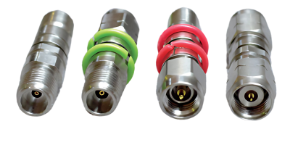
CoreHC directly addresses this challenge with 2.5 mm center-to-center spacing, delivering a step-change in RF interconnect density.
This tighter spacing allows space system designers to:
- Dramatically increase RF channel counts within fixed volumes
- Reduce payload weight and footprint
- Enable multi-function, high-integration payload designs
- Build architectures that scale for future mission demands
Rather than treating interconnects as a limiting factor, CoreHC turns them into a density enabler.
Designed for LEO and GEO Applications
High density only delivers value when it works reliably within real mission environments. CoreHC solutions are engineered to support both LEO and GEO use cases with tailored performance.
Tailored for LEO Constellations
LEO programs require high-density solutions that are also scalable and manufacturable. CoreHC enables:
- Compact RF layouts optimized for small satellites
- Simplified integration in modular assemblies
- Repeatable, high-volume production readiness
- Robust performance under rapid thermal cycling
The result: high-density architectures that scale economically across entire constellations.
Optimized for GEO Platforms
GEO missions require long-term reliability and maximum performance per spacecraft. CoreHC supports:
- Dense interconnects for high-throughput payloads
- Precision alignment for consistent RF performance
- Integration of complex, multi-board architectures
- High-frequency signal integrity in tight layouts
Here, density enables more capability per orbit slot, maximizing return on every satellite.
Enabling System-Level Density: Cable-to-PCB and PCB-to-PCB
CoreHC’s value extends beyond individual connectors; it enables density across the entire RF signal path.
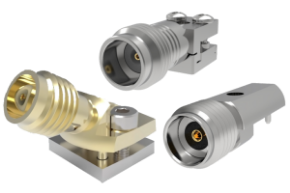
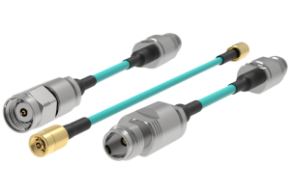
Cable-to-PCB Solutions
- High-density external I/O connections
- Efficient routing between subsystems
- Support for modular payload integration and testing
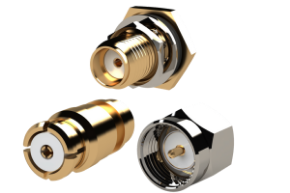
PCB-to-PCB Block (Array) Solutions
- Ultra-high-density board stacking
- Blind-mate interconnects for compact RF modules
- Ideal for phased arrays, beamforming networks, and digital payloads
Together, these solutions allow designers to implement true high-density architectures from interface to internal system integration.
High Density Without Compromise
In space, density is only valuable if it comes with reliability. CoreHC™ is engineered to deliver both.
Key performance characteristics include:
- Mechanical robustness for launch shock and vibration
- Thermal stability across extreme temperature ranges
- Consistent electrical performance at tight spacing
- Low insertion loss and minimized crosstalk
This ensures that increasing density does not introduce risk; it enhances system performance without sacrificing mission assurance.
The Future of Space Is Dense
The trajectory of space system design is clear:
- Digitized RF payloads
- Electronically steered arrays
- Multi-orbit, multi-mission platforms
- Open, modular architectures
All of these depend on one foundational capability: scalable, high-density RF interconnects.
CoreHC™ provides that foundation, bridging the gap between traditional connectivity and the needs of next-generation space systems.
Design for Density. Enable the Mission.
As space missions demand more functionality in less space, density becomes the key to unlocking performance, scalability, and efficiency.
With CoreHC™-compliant 2.5 mm solutions, you can:
- Maximize RF channel density
- Reduce SWaP
- Enable advanced payload architectures
- Maintain the reliability required for space
CoreHC™ isn’t just supporting high-density RF, it’s enabling it.